
Bottles, jars, tubs and containers
Discuss this requirement as part of your machinery specification.
Machinery
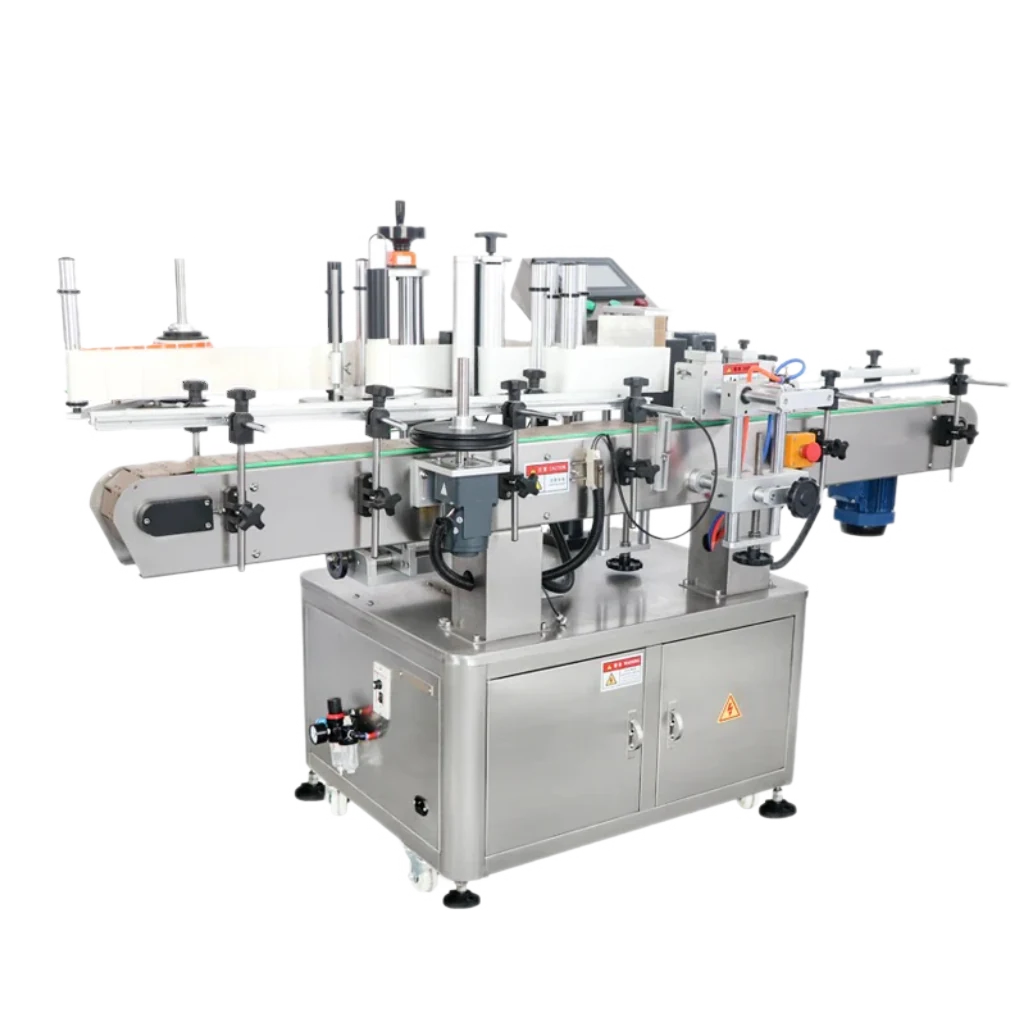
Labelling machinery for applying labels cleanly and consistently to bottles, jars, tubs and other packaged goods.
Machinery page
Labelling machinery for applying labels cleanly and consistently to bottles, jars, tubs and other packaged goods.
Next step
Provide the product, packaging format, current process and the level of automation you want to achieve.
Discuss this requirement as part of your machinery specification.
Discuss this requirement as part of your machinery specification.
Discuss this requirement as part of your machinery specification.
Labelling machine selection
Consistent labelling depends on container geometry, web handling, product control, sensing and the required relationship between the label and pack features.
Round, flat, oval, tapered, flexible or irregular containers need different control methods. Seams, handles, moulding marks and unstable bases can influence label position and orientation.
Provide labels on the intended backing roll. Label size, material, adhesive, gap, transparency, roll direction and core arrangement affect dispensing and sensing.
Define whether the label is wraparound, front and back, top, base or orientation-sensitive, and how position, wrinkles, bubbles and edge alignment will be judged.
A pressure-sensitive labelling process typically controls the product, detects its position, advances the label web, separates the label from its backing and applies it while the pack is supported. The method varies with container shape and label position. A round bottle may be rotated during wraparound application, while flat or oval packs may need controlled front-and-back presentation.
Print-and-apply equipment adds data creation and printing before the label is transferred to the product, carton or pallet. That introduces further questions about label content, data source, verification, print quality and the position available for application. Use the wider Lancing catalogue for model-level print-and-apply details.
Changeover should cover guides, sensors, applicator position, product spacing and label roll setup. Clear labels, reflective packs, soft containers and tapered surfaces can need additional trials. For integrated lines, the labeller also needs stable infeed spacing and a predictable relationship with filling, capping, coding and downstream inspection.
A standard wraparound arrangement may not suit a tapered, flexible or heavily featured pack. Sleeves, direct print, pre-labelled containers or manual application can sometimes be more appropriate. The decision should be based on real samples and the required finish.
For model-level labelling and print-and-apply options, see the Lancing labelling machinery range. Send sample and line details through the contact page.
Buyer questions
Accurate answers depend on production labels and containers rather than catalogue dimensions alone.
Provide representative containers and labels on the intended backing roll. Include the smallest, largest and most difficult formats plus examples of the required finished position.
Wraparound application normally rotates or rolls a round container while one label is applied. Front-and-back systems control the pack while separate labels are placed on opposing faces or panels.
They may be possible, but container support, label shape, application pressure and finished appearance need a practical trial. Standard settings for rigid parallel-sided packs should not be assumed.
Transparent labels and reflective containers can affect label-gap and product sensing. The actual material combination should be tested and the required sensor arrangement confirmed.
It is relevant when variable information must be printed and applied as part of the process. Data source, print content, verification, label size, substrate and application position all need to be defined.
Yes, provided container spacing, transfer, accumulation and control signals are planned. The label application stage must receive stable, correctly closed containers in a repeatable orientation where required.
Label application system
Reliable labelling depends on the relationship between the label roll, the dispense point, the product datum and the way the finished application is checked.
Roll width, unwind direction, backing stiffness, label gap, shape and adhesive behaviour affect sensing and release. Final production rolls are more useful for testing than artwork dimensions alone.
The machine needs a repeatable reference surface or position. Round, tapered, flexible and irregular packs may require different methods of guiding, rotating or holding the product during application.
Pre-printed labels, overprinted labels and print-and-apply labels have different data, verification and consumable workflows. The required information should be defined before the applicator is selected.
A conventional label applicator dispenses a prepared label and places it onto a controlled product. Print-and-apply adds a variable-data stage before application, so the specification must cover message creation, data transfer, print quality, label presentation and the response to an unreadable or missing label. The product may be an individual container, an outer case or a pallet load, and each requires a suitable application position and support method.
For case or pallet labelling, the datum is often the face or corner presented to the applicator rather than the shape of a bottle. The label must remain readable after the application motion and subsequent handling. Where codes are also printed directly onto the pack, use the coding and marking page to decide which information belongs on the label and which belongs elsewhere.
Record the roll loading path, web tension points, sensor position, dispense setting, product guides and application position for each format family. The first labelled packs after a change should be checked for the correct label, orientation, position, adhesion and any variable data. A changeover is not complete until the product can pass through the connected handling equipment without rubbing, lifting or losing its required orientation.
Decorated containers should be assessed in their filled and closed condition because weight, surface treatment, cap height and product residue can change handling. Tapered or flexible packs may need a more controlled application method than a rigid parallel-sided container. Where the available label panel is limited, artwork, label shape and machine tolerance should be considered together rather than independently.
The machinery selection guide provides a framework for comparing applicator scope, while the enquiry should include final label rolls, decorated packs and the required finished appearance.
Labelling project resources
Define the label data, substrate, product datum, application surface, verification and line response before selecting the labelling method.
Plan variable data, label printing, product tracking, application method and verification.
Define SSCC data, adjacent-side placement, pallet presentation, scanning and controlled release.
Control label rolls, recipes, sensors, guides, line clearance and first-off approval.
Labelling questions
Label material, pack presentation and the required labelled result must be verified together.
The suitable labelling machine depends on the pack shape and stability, label position, number of labels, label and liner construction, surface condition, required orientation, variable data and production flow. Round containers, flat-sided packs, top surfaces and cases use different product-control and application methods.
Use the labelling machine types comparison to define the application before selecting an applicator.
Bubbles, wrinkles and creases can result from the label material or adhesive, contaminated or shaped surfaces, poor web tension, incorrect peel geometry, variable product speed, inadequate wipe-down or applying the label before the pack is stable. The visible defect does not always identify the first cause.
Retain affected packs and label-roll details, then work through the sequence in the labelling troubleshooting guide.
Repeatable label placement depends on a consistent product datum, controlled pack speed, stable guide and sensor positions, repeatable label-web handling, correct label detection and a defined application or wipe-down point. Variation in the container or label roll can be as important as the machine setting.
Agree where placement is measured and the acceptable finished result using actual decorated packs, not an assumed reference point.
Print-and-apply is more suitable when variable information must be created and applied as part of the packing process, such as a product, case or pallet identifier. It requires control of the data source, print verification, label application and the response to a failed or unreadable label.
For fixed artwork with only a separate code, a standard label applicator plus another coding method may be simpler. Review the print-and-apply guide before defining the data workflow.
Application evidence
Label placement depends on both the label roll and the surface or datum presented by the moving pack.
Provide the label size, gap, liner, roll direction, core, roll diameter and application position together with representative containers. Taper, surface condition, pack flexibility and orientation features can change the required wipe-down or wrap method.
If the project must prove label presence, position, artwork or variable data, define inspection separately from application. The inspection and reject guide explains detection, pack tracking and reject confirmation.
A labelling machine does not automatically provide every required inspection; application sensing and finished-pack verification are separate tasks unless both are included in the proposed system. State whether the requirement is label presence, position, artwork, barcode, variable data or several conditions, then agree the inspection and reject evidence.
A production label roll is needed because facestock, adhesive, liner, gap, winding and release behaviour affect the web path and application result. A printed sample or loose label cannot reproduce the way the roll unwinds, senses, peels and conforms to the pack.